


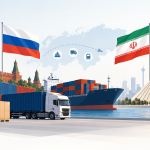

The export of fresh vegetables is an important part of Iran’s agricultural trade. Due to the diversity of agricultural production, favorable climatic conditions, and access to neighboring markets, this sector has considerable potential for growth. Products such as tomatoes, cucumbers, bell peppers, eggplants, and zucchini are among the fresh vegetables that can be supplied to international markets in compliance with quality and food safety standards.
Today, exporting fresh vegetables involves more than simply producing high-quality products. Standard packaging, appropriate transportation, knowledge of target markets, and compliance with customs regulations all play an important role in exporters’ success.
This article examines the stages of exporting fresh vegetables from Iran, target countries, required documents, packaging methods, and the factors affecting the profitability of this trade.
The Importance of Fresh Vegetable Exports in Iran’s Economy
Thanks to its diverse climatic regions, Iran can produce various types of fresh vegetables throughout different seasons of the year. Greenhouse cultivation has also created opportunities to produce high-quality products and supply them outside their usual growing seasons.
The main advantages of exporting fresh vegetables from Iran include:
A wide variety of agricultural and greenhouse products
Land access to important regional markets
The ability to supply products in different seasons
Opportunities to develop packaging and export higher-value-added products
Economic opportunities for farmers and trade professionals
The potential to establish long-term partnerships with foreign buyers and wholesalers
However, taking advantage of these opportunities requires attention to consistent product quality, transportation costs, destination market conditions, and competition from other exporters.
Major Fresh Vegetables Exported from Iran
- Tomato Exports
Tomatoes are one of the major products in the fresh vegetable trade. Due to their widespread consumption in different countries, they have considerable export potential.
Successful tomato exports require attention to factors such as ripeness, uniform size, visual condition, fruit firmness, and resistance during transportation.
Selecting suitable export varieties and using durable packaging can help reduce product damage and losses.
- Cucumber Exports
Fresh cucumbers and greenhouse-grown cucumbers are among the products that can be supplied to foreign markets. Export-quality cucumbers should have a healthy appearance, appropriate color, uniform size, and desirable quality.
Maintaining cucumber freshness from harvesting until delivery to the customer is essential. Therefore, temperature, humidity, packaging, and transportation must be managed according to the product’s characteristics.
- Bell Pepper Exports
Green, red, yellow, and orange bell peppers are attractive products for certain international markets.
Export-quality bell peppers must meet the destination country’s requirements regarding color, size, skin condition, and agricultural pesticide residue levels.
Controlled cultivation methods and appropriate packaging play an effective role in improving the product’s competitiveness.
- Eggplant Exports
Eggplant is another fresh vegetable for which demand exists in the markets of some neighboring countries.
Successful eggplant exports require selecting products with healthy skin, uniform color, suitable texture, and no physical damage. Proper storage conditions and protection against excessive pressure are also important for maintaining product quality.
- Zucchini Exports
Zucchini and certain other varieties of squash can also be supplied to regional markets.
The success of exporting these products depends on demand in the destination country, competitive pricing, product quality, and the ability to deliver promptly.
Best Target Markets for Iranian Fresh Vegetable Exports
Selecting the destination country is one of the most important decisions in the fresh vegetable trade. Geographic distance, customers’ purchasing power, trade tariffs, import standards, and transportation conditions should all be evaluated before choosing a market.
Exporting Fresh Vegetables to Iraq
Iraq is one of the regional markets worth considering for Iranian agricultural exports. Geographic proximity and the availability of land transportation are among the main advantages of this route.
However, exporters should check potential import restrictions, seasonal changes in demand, and Iraq’s border regulations before dispatching shipments.
Exporting Fresh Vegetables to the UAE
The United Arab Emirates can be a target market for fresh vegetable exports due to its extensive food trade activities and well-developed international distribution and commercial networks.
In this market, product quality, professional packaging, food safety, and reliable delivery are particularly important.
Exporting Fresh Vegetables to Russia
Russia is another market where agricultural exporters can explore business opportunities.
To operate in the Russian market, it is essential to comply with phytosanitary requirements, pesticide residue limits, labeling regulations, packaging quality standards, and refrigerated transportation conditions.
Exporting Fresh Vegetables to Oman and Qatar
Oman and Qatar are also potential markets for fresh vegetables. Maintaining product freshness and delivering orders in accordance with buyers’ requirements are particularly important in these countries.
To enter these markets successfully, exporters should focus not only on pricing but also on consistent quality and establishing long-term relationships with buyers.
Stages of Exporting Fresh Vegetables from Iran
Exporting fresh vegetables requires careful planning and the implementation of a series of production, commercial, and customs procedures.
Stage 1: Selecting the Export Product
The first step is to determine which product is most suitable for export. Market demand, harvesting season, available quality, total production cost, and shelf life should all be considered when selecting a product.
Stage 2: Identifying Foreign Buyers
After selecting the product, the next step is to find reliable buyers in the destination country.
Contacting importing companies, agricultural wholesalers, food distribution networks, and participating in trade exhibitions can help identify potential customers.
The buyer’s credibility and payment terms should be verified before signing a contract.
Stage 3: Product Preparation and Grading
After harvesting, fresh vegetables must be inspected and sorted according to criteria such as size, color, appearance, and quality.
Removing damaged products and separating shipments by quality grade can increase customer satisfaction and reduce the risk of rejected shipments.
Stage 4: Export Packaging
Packaging must be selected according to the product type, transportation time, and destination country’s standards.
In addition to protecting the product, appropriate packaging can increase its commercial value and appeal in international markets.
Stage 5: Obtaining Required Documents and Certificates
Exporting fresh vegetables may require commercial documents, phytosanitary certificates, and specific approvals required by the destination country.
The required documents vary depending on the product, importing country, and regulations in force at the time of export.
Stage 6: Completing Customs Procedures
At this stage, shipment information is registered in the relevant systems, and the export declaration and other required documents are submitted.
Following the completion of inspections and legal formalities, the shipment may leave the country in accordance with applicable regulations.
Stage 7: Transportation and Delivery
Selecting the appropriate transportation method is a critical stage in fresh vegetable exports.
Using refrigerated trucks or other temperature-controlled transportation equipment, according to the product type and route, can help prevent quality deterioration and reduce losses.
Required Documents for Exporting Fresh Vegetables
Required documents vary according to the regulations of the country of origin and the destination country. However, the main documents that may be required include:
A valid commercial card or use of an authorized legal export mechanism
Commercial Invoice
Packing List
Export Declaration
Certificate of Origin, if required
Phytosanitary Certificate
Transportation Bill of Lading
Laboratory test and quality control certificates, if required by the destination country or buyer
Product-specific permits or approvals related to the product and target market, where applicable
The latest customs regulations, quarantine requirements, and restrictions applicable to each product must be checked before export.
Standard Packaging for Export Fresh Vegetables
One of the most important factors in successful fresh vegetable exports is proper packaging.
Fresh vegetables are sensitive to impact, pressure, temperature, and storage conditions. Therefore, they must be packed according to their physical characteristics and the duration of transportation.
The characteristics of suitable packaging include:
Sufficient resistance to pressure and handling
Appropriate ventilation according to the product type
Protection against crushing and mechanical damage
Use of materials approved for food contact
Packaging weight appropriate to the product and buyer’s requirements
Inclusion of essential product information in accordance with the destination country’s regulations
Information such as product name, country of origin, net weight, exporter’s name, batch number or traceability information, and packaging specifications may need to be displayed on cartons according to destination requirements.
Professional packaging not only reduces losses but can also help build trust among foreign buyers.
Transportation of Export Fresh Vegetables
In the fresh vegetable trade, transportation speed and quality play a very important role.
The main transportation methods include:
Land Transportation: Suitable for many neighboring markets and allows the use of refrigerated trucks.
Sea Transportation: Used for certain destinations in the Persian Gulf region and other trade routes. It requires careful management of transportation time and product storage conditions.
Air Transportation: May be suitable for specific shipments, high-value products, or urgent orders; however, its cost is generally higher.
It should be noted that the appropriate storage temperature is not the same for all fresh vegetables. Transportation conditions for cucumbers, tomatoes, bell peppers, and eggplants must be determined according to the sensitivity of each product.
How Much Does It Cost to Export Fresh Vegetables?
The cost of exporting fresh vegetables depends on various factors, and no single fixed amount can be specified for all products and markets.
The main export costs include:
Purchasing or producing the products
Sorting and grading
Packaging and export cartons
Pre-cooling and storage under appropriate conditions
Domestic and international transportation
Customs services and export documentation
Inspection, testing, and obtaining required certificates
Insurance and financial costs
Potential costs resulting from product losses and delays
To calculate the costs accurately, the product type, tonnage, destination, transportation method, and contract terms must be specified.
How Profitable Is Fresh Vegetable Exporting?
The profitability of fresh vegetable exports depends on several factors, including purchase price, international selling price, transportation costs, exchange rates, product loss rates, and market conditions.
To calculate actual profit, all direct and indirect export costs must be deducted from sales revenue.
Net Export Profit = Sales Revenue − Total Export Costs
Reducing product losses, purchasing high-quality products from reliable producers, selecting appropriate transportation routes, and working with trustworthy buyers are among the measures that can improve profitability.
Challenges in Fresh Vegetable Exports
Exporting fresh agricultural products offers economic opportunities but also involves several challenges.
- Product Perishability: Fresh vegetables have a limited shelf life, and transportation delays can lead to a decline in quality.
- Price Fluctuations: Fresh vegetable prices may change depending on the harvesting season, supply and demand, and market conditions.
- Phytosanitary Requirements: Compliance with plant health standards and maximum permissible pesticide residue limits is essential for entering many markets.
- Trade Restrictions: Changes in import regulations in the destination country or export restrictions in the country of origin can affect trade operations.
- Transportation Costs: Choosing an unsuitable route or lacking standard transportation equipment may increase costs and product losses.
Strategies for Successful Fresh Vegetable Exports
To succeed in international markets, several fundamental principles should be followed:
Select target markets based on research and reliable trade information
Work with reputable producers and greenhouse operators
Inspect product quality before packaging
Comply with phytosanitary and food safety requirements
Use appropriate packaging and standard transportation methods
Clearly define pricing, payment, and delivery terms in contracts
Maintain ongoing relationships with foreign customers
Check export and import regulations before each shipment
In the competitive agricultural market, maintaining quality and fulfilling commercial commitments can be just as important as the selling price in determining an exporter’s success.
The Future of Fresh Vegetable Exports from Iran
The development of greenhouse cultivation, improved packaging quality, better cold storage infrastructure, and expanded trade relations can create new opportunities for Iranian fresh vegetable exports.
One of the key ways to develop this sector is to focus on producing goods that meet destination-country standards and establishing a well-organized supply chain from the farm to the foreign customer.
Exporters who can provide consistent quality, competitive prices, and reliable delivery have a better chance of establishing long-term business relationships.
Frequently Asked Questions About Fresh Vegetable Exports
Is Exporting Fresh Vegetables from Iran Profitable?
Fresh vegetable exports can be profitable; however, the level of profitability depends on purchase prices, export costs, destination market conditions, and product loss rates. An economic assessment of each shipment is essential before signing a contract.
Which Fresh Vegetables Are Suitable for Export?
Tomatoes, cucumbers, bell peppers, eggplants, and zucchini are among the products with export potential. The final selection should be based on market demand and product quality.
What Are the Main Target Countries for Iranian Fresh Vegetable Exports?
Iraq, the UAE, Russia, Oman, and Qatar are among the potential markets. The best destination depends on the product type, current trade conditions, and each country’s import requirements.
Is a Phytosanitary Certificate Required for Exporting Fresh Vegetables?
A phytosanitary certificate is required for many plant-based products. Specific requirements should be verified with the relevant authorities based on the product and destination country’s regulations.
What Is the Best Packaging Method for Export Fresh Vegetables?
Suitable packaging should protect products against pressure and damage and comply with transportation conditions and buyer requirements. Durable cartons and boxes designed for fresh produce are among the commonly used options.
Conclusion
Exporting fresh vegetables from Iran is one of the significant opportunities in agricultural trade. Product diversity, greenhouse cultivation capacity, and access to regional markets provide a suitable foundation for exporters.
However, success in this trade requires knowledge of target markets, sourcing high-quality products, standard packaging, compliance with phytosanitary requirements, and effective management of transportation costs.
If you intend to enter the fresh vegetable export market, it is advisable to first identify the right market for your product and plan the export process by reviewing trade regulations and working with reliable suppliers and buyers.
For consultation on fresh vegetable exports, inquiries about export product prices, and evaluation of business cooperation opportunities, please contact our commercial team.